
Industries
Common Area Cleaning for San Francisco Apartments and HOAs
Lobbies, stairwells, elevators, mail rooms and shared amenities kept presentable in San Francisco rentals and condo associations, on visit days set by the manager or board.
Printable checklist
Shared space in a city of stacked homes
Housing in San Francisco climbs rather than sprawls. Edwardian and Victorian flats share one narrow stair and a front door, courtyard buildings wrap a garden behind the street wall, and newer towers around the waterfront and the southern neighborhoods add amenity floors, package rooms and roof terraces. Condominium associations run converted lofts, small buildings with a handful of owners and full-service high-rises.
Whatever the building, residents judge it on the spaces they pass through every day. A smudged lobby door, a sticky elevator button or a hallway runner full of grit says more about how the property is run than any notice on the board. Regular common area cleaning keeps those first impressions in order between the manager’s walk-throughs.
Lobbies, mail rooms and elevator cabs
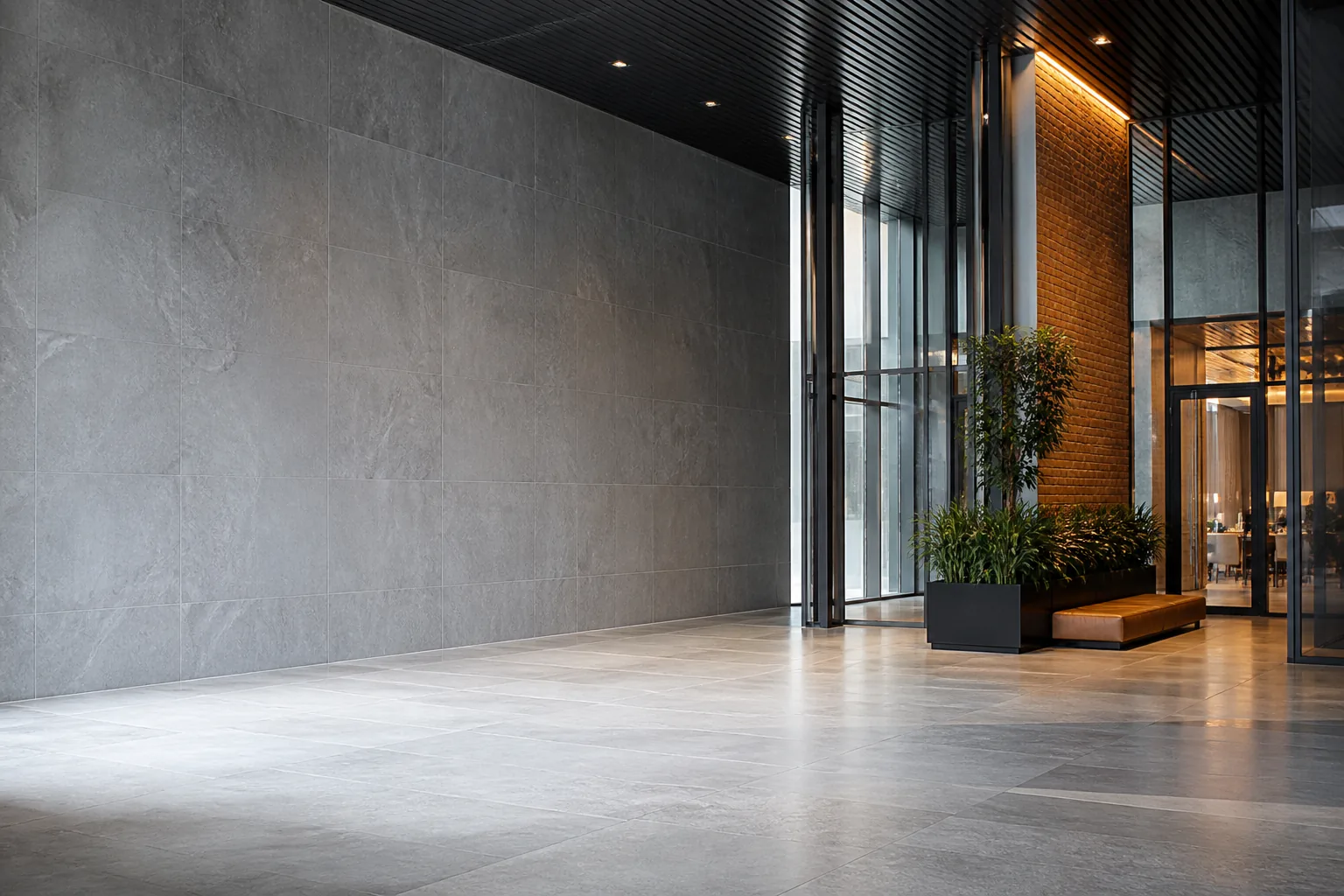
The lobby is cleaned top to bottom: entry glass and sidelights, door pushes, intercom panels, mailbox fronts, lobby furniture and the entry mat. Package rooms get their shelves dusted and their floors swept and mopped, so deliveries are not set down on a dirty surface. The concierge desk, if your building has one, is wiped and kept clear of dust.
Elevator cabs are among the most used surfaces in any building. The crew cleans stainless or laminate walls, handrails, mirrors, the button panels inside and out and the door tracks, then vacuums or mops the cab floor. Landing call buttons on every floor are wiped as the crew works its way through the building.
Corridors, stairs and carpet runners
Crews run the vacuum down every hallway runner and into the corners beside each unit door, where grit gathers first. Dust comes off baseboards and corridor windowsills, every switch plate and fire-door crash bar on the floor gets a wipe, and spots on carpet are treated before they set. Stair treads, landings and railings are cleaned from the top floor down, so nothing is tracked back over finished steps.
Periodic carpet extraction brings back corridor runners that daily traffic has flattened and dulled. Tile and stone entry floors can be scrubbed, and marble or terrazzo in older lobbies can be cleaned and polished. Vinyl in back corridors and utility areas can be stripped and refinished through our commercial floor care service.
Amenity rooms that residents notice
Fitness rooms get their equipment grips, benches, mirrors and rubber flooring cleaned, much like our gym cleaning routine. Clubrooms and lounges have tables, counters, the kitchenette sink and upholstered seating cleaned and vacuumed. Shared laundry rooms get their folding tables, machine tops and floors wiped and swept, and lint is cleared from around the machines. Bike rooms and storage cages get their floors swept and the racks tidied, a small job that riders in the building appreciate.
Roof decks and courtyards are swept and their tables and benches wiped. Bin rooms are swept, mopped and given a wipe around each chute door. In a city where every building sorts compost, recycling and landfill, a tidy bin room keeps residents using the right container.
Garages, entries and the outside of the building
Garage floors can be swept on the same visits, and stairwells leading down to parking get the same treatment as the rest of the building. Front steps, entry walks and the sidewalk along the frontage can be refreshed with pressure washing, and courtyard plantings can be trimmed under our landscape maintenance service, so outdoor upkeep and indoor cleaning share one schedule.
Visits timed around residents
Residents are home at all hours, so we plan noisy tasks such as corridor vacuuming for mid-morning and early afternoon, when hallways tend to be empty. Wet-floor signs go out while lobby and stair floors dry. Smaller buildings often need one or two visits a week; a larger tower with a busy lobby can add a day porter who returns to the entry, elevators and package room through the day.
Every visit is done by background-checked cleaners, and supervisors perform quality inspections, so anything flagged goes straight onto the next visit.
Planning the visits with your manager or board
A useful request lists the floors, the number of stairwells and elevators, the amenity rooms and any garage or courtyard you want covered, along with how often each should be cleaned. A supervisor tours the property with the manager or a board member, note access codes and key procedures, and send back a written quote that lists every area and its visit frequency. Start the process on our contact page.
A few useful answers
Common questions.
How many visits a week does a San Francisco apartment building need?
That comes down to traffic. A tower lobby with constant deliveries earns several visits weekly, and a six-unit building with a single stair stays neat on one. Each area gets its own frequency once we have seen the building.
How do you keep the work quiet for people living in the building?
Vacuuming and other loud work is planned for the middle of the day, wet floors are signed, and the crew works one floor at a time so hallways stay passable.
We're an HOA. What paperwork does the board receive?
Before cleaning begins, the board is sent our certificate of insurance to keep with its vendor records. We are bonded and insured, and our cleaners are covered by workers’ compensation.
Are the roof deck, gym and laundry room part of the service?
They can be. Each amenity is added to the plan with its own tasks and visit days, so you choose which shared spaces are covered and how often.
Can you handle the sidewalk and front steps too?
Yes. Pressure washing for the entry, steps and frontage can be scheduled alongside indoor cleaning, on its own frequency.